This post was originally published on this site.
The hardest part of precision shooting is finding where your shots are landing. If we’re being honest with ourselves, the constant walking to and from the target in the search of bullet holes get quite discouraging, especially when trying to up our
standards with precision. Not to mention, there’s that heart drop and spike in blood pressure when you feel after finally walking up to the target and finding out that you didn’t even leave a spec of dirt on the target let alone a hole.
Advertisement — Continue Reading Below
Although spotting scopes provide some great help, they’re not without their own limitations.
When using a spotting scope, the farther out the target is, the more the environment becomes a factor between the spotting scope’s lens and the target itself. Besides the landscape itself, you have wind, mirage, light levels, etc. You can also run out of mechanical adjustment on the scopes themselves which might leave you stuck or having to angle it in weird ways.
Thankfully, the folks over at Longshot have an option out on the market that solves this issue.
Advertisement — Continue Reading Below
If You’re Not Cheating, You’re Not Trying Hard Enough
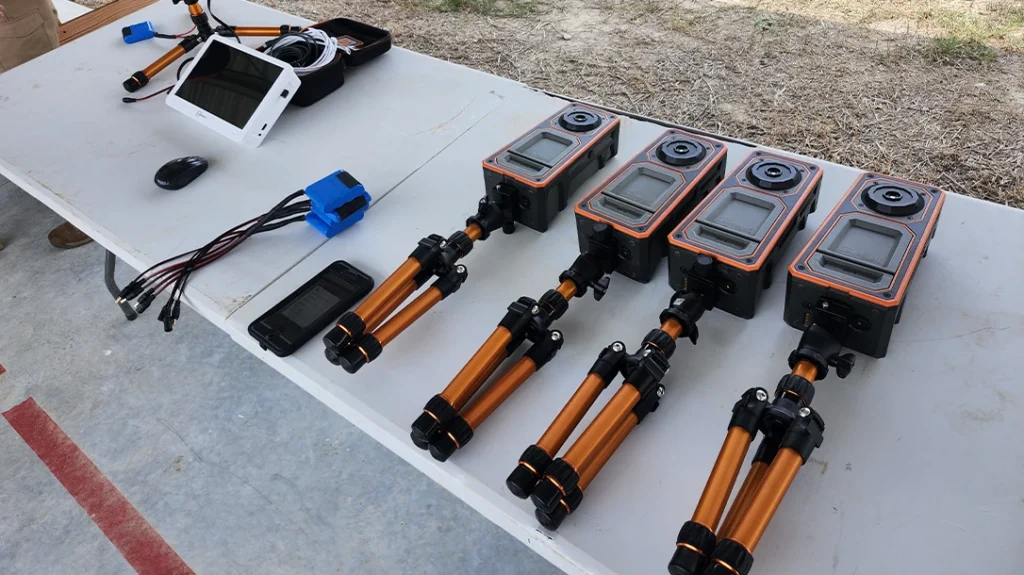
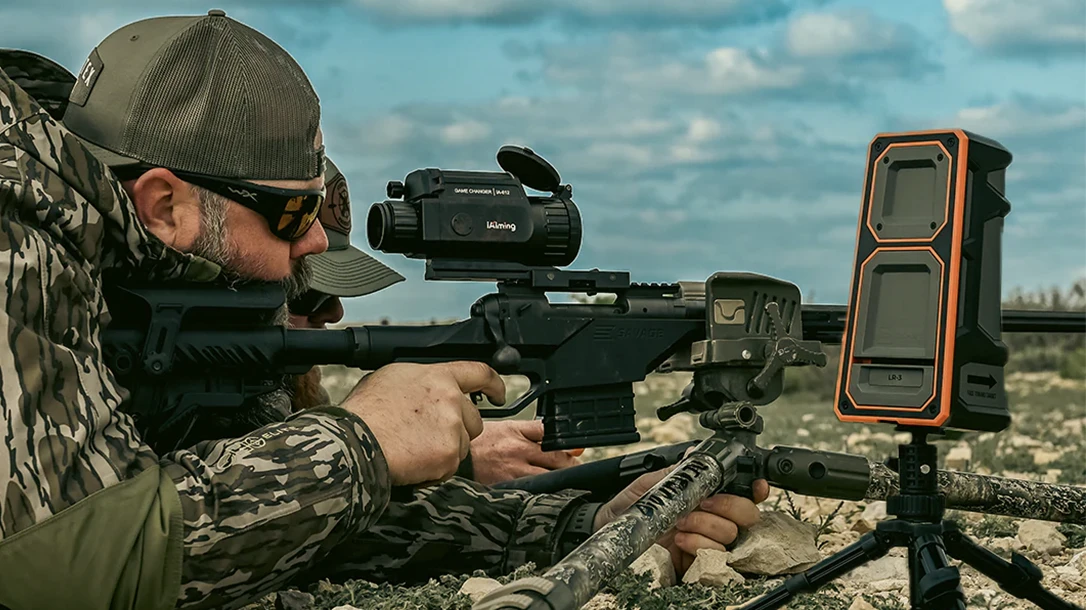
Longshot makes low profile cameras designed for the shooting community, and more specifically, for precision shooters. I had the opportunity recently to head out to Sellmark Ranch in Texas with Scott McCree. There, we played with these cameras on the long range rifle bays. We took four Longshot cameras and placed them out at 1,000 yards, 1,760 yards (1 mile), 3,520 yards (2 miles) and 3,960 yards (2 ¼ miles). I’ll admit, when I was told we were doing long distance shooting, I wasn’t thinking of anything much 1,000, let alone 2 miles. But it was the perfect environment for Scott to show off the Longshot cameras and how well they worked.
Back at the benches, Scott had all four feeds from the different cameras connected on one screen, so we could see all four targets. Since each Longshot camera was placed just a few yards away from each target, the view of each camera was pretty well isolated to just the target it was in front of.
Advertisement — Continue Reading Below
While it’s cool seeing all 4 targets on one screen, that doesn’t help much when
the focus is just on one. Fortunately, Longshot’s software allows you to focus on a single feed from the entire array. This allows shooters to lock-in on that specific camera’s view and have it fill the entire screen. As we shot further out, this feature came in really handy. Let’s face it, at 2 miles, a spotting scope becomes more difficult to use. Finding bullet traces, dirt splashes and even targets themselves gets trickier. It’s hard to argue with a camera whose live feed provides real time information to a screen in front of your eyes where you don’t have to second guess yourself. It makes shot-calling and spotting so much easier.
Going Far With Longshot Cameras
Advertisement — Continue Reading Below
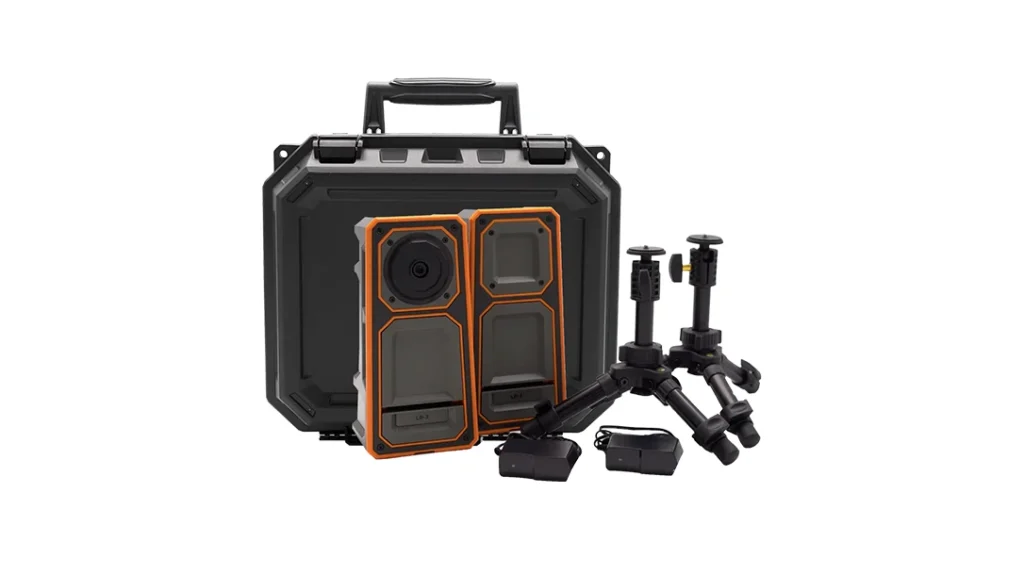
Calling them “cameras” also doesn’t feel like it does these Longshots enough justice. These devices do more than act as simple cameras. For example, they also provide options to mark your last hit, compare your shots, and calculate MOA based on your target size and distance. If you want to go further down the rabbit hole, you can input your environmental info and your specific bullet loads too.
Longshot cameras are a godsend that helped us hit targets at distances that I’m not sure I’d attempt on my own–especially if the only way I could confirm hits was to make frequent trips between the firing line and the target.
While at Sellmark Ranch, Longshot took everyone’s thoughts of “wishing they had a camera down at their target,” and made it a reality. They took the concept, ran with it and continued to polish and iterate over it. After speaking with Scott, it seems as if Longshot shows no signs of changing that mindset of improvement any time soon.
Advertisement — Continue Reading Below
I’m excited, especially because this technology makes the extreme long range learning curve less daunting, which means that many more shooters get to experience the joys of precision shooting.
The post Spotting The Future With Longshot Cameras appeared first on Athlon Outdoors Exclusive Firearm Updates, Reviews & News.